#10635Prince and Princess
★★★★時間限制:2000 毫秒記憶體限制:64 MB
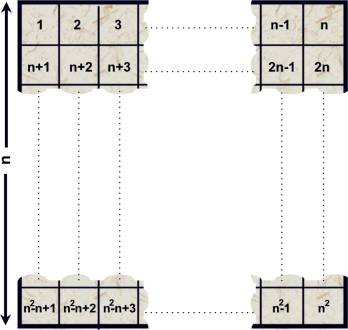
In an n × n chessboard, Prince and Princess plays a game. The squares in the chessboard are numbered 1, 2, 3, . . . , n ∗ n, as shown below:
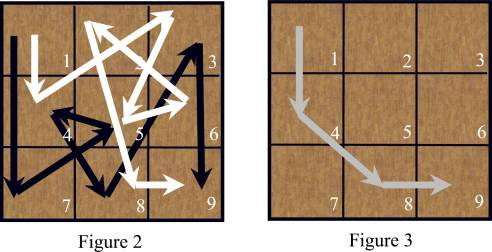
Prince stands in square 1, make p jumps and finally reach square n ∗ n. He enters a square at most once. So if we use x to denote the p-th square he enters, then x, x, …, x are all different. Note that x = 1 and x = n ∗ n. Princess does the similar thing – stands in square 1, make q jumps and finally reach square n ∗ n. We use y, y, …, y to denote the sequence, and all q + 1 numbers are different.
範例輸入 1
1
3 6 7
1 7 5 4 8 3 9
1 4 3 5 6 2 8 9
範例輸出 1
Case 1: 4
Pro 專屬功能: 查看這題在歷屆 CPE 出現過幾次 — 升級以解鎖.